


What is a Crypto Prop Firm?


.svg)

TL;DR: A crypto prop firm gives traders access to simulated funded accounts under a defined rule set. Tradeify247 offers 1-Step, 2-Step, and Instant Funding paths with account-specific targets, drawdown limits, and payout requirements. The standard funded-account split is 80/20, but an account label does not guarantee passing, funding, profits, or payouts. Review the current rules for the specific account before purchasing.
Key Points about a Crypto Prop Firm
- Definition: A crypto proprietary (prop) trading firm is a company that provides capital to traders, allowing them to trade cryptocurrencies or crypto-linked derivatives using the firm's money rather than their own personal savings.
- The Prop Trading Model: Traders typically undergo an evaluation phase to prove their skills. Upon passing this assessment, they receive a funded account (often simulated with real-money payouts) and keep a majority of the profits, commonly between 80% and 90%.
- Spot vs. Futures: There is a critical distinction between firms trading "spot" crypto (buying and owning the actual asset) and "futures" prop firms (speculating on price movements via contracts). Futures trading often offers a more regulated environment, clearer margin rules, and easier short-selling capabilities, a model used by firms like Tradeify247.
Risk Management: Success in crypto prop trading relies heavily on strict risk management protocols, such as position sizing and stop-losses, rather than just predicting market direction, as firms impose strict drawdown (loss) limits.

Trade Crypto Without Limits
Tradeify is built for crypto traders who want clarity, consistency, and speed — not surprises.


Understanding the Basics of Proprietary Trading
In the high-stakes world of financial markets, capital is often the primary barrier to entry for talented traders. Proprietary Trading (Prop Trading) acts as a solution to this problem. A prop firm is a financial institution that trades financial instruments, such as stocks, futures, or cryptocurrencies, using its own internal capital rather than managing funds on behalf of clients.
The concept is transformative: the firm assumes the financial risk, and the trader provides the skill. While traditional institutional firms like Galaxy Digital or Alphalab Capital hire traders as employees to manage internal funds, the modern "retail" prop firm model has democratized access. In this structure, traders from around the globe can audition for capital through Funded Trader Programs.
The Core Crypto Prop Firm Model of Evaluation, Funding, and Profit Split
The modern prop trading lifecycle typically follows three distinct stages: The Evaluation (Challenge): To prove their ability, a trader pays a fee to enter a simulated trading environment where they must hit a specific profit target while adhering to strict risk rules. The Funding Stage: Successful candidates who pass the evaluation are granted a "funded" account. While many firms continue to use simulated environments for risk management (copy-trading successful trades to live markets), the trader becomes eligible for real performance payouts. The Profit Split: This is the industry's primary incentive. Traders typically retain a significant portion of their earnings, with standards often ranging from 80/20 to 90/10 in favor of the trader.
Key Concept: The most significant difference between retail trading and prop trading is the allocation of risk. In a personal account, a series of bad trades depletes personal savings. In a prop firm, the risk is borne by the firm (up to a specific loss limit), protecting the trader's personal wealth.
The conversation happens live
Blog comments are too slow for crypto. Join 12,000+ traders in our Discord to discuss this article, share charts, and debate the market in real-time.
Join Discord
The Pros and Cons of Crypto Prop Trading
Before attempting to qualify for a funded account, it is essential to assess the opportunities of prop trading against the inherent risks.
Pros of Joining a Crypto Prop Firm
- Access to Capital: The most obvious benefit is buying power. Traders can access accounts ranging from $50,000 to $200,000+ for a fraction of the capital required to fund such an account personally.
- Defined Personal Cost: A trader’s direct financial exposure generally includes the account fee and any optional add-ons, resets, or replacement purchases. The funded account still carries trading, rule, and payout-eligibility risk.
- Professional Tools and Community: Firms provide access to institutional-grade analytics, news feeds (e.g., Squawk services), and a community of like-minded traders for mentorship.
Cons of Trading with a Crypto Prop Firm
- Strict Rules: The "freedom" of crypto trading is replaced by strict discipline within a prop firm. Daily loss limits and consistency rules can be frustrating for traders used to high-risk positions.
- Evaluation Fees: If a trader fails an evaluation, the fee is generally non-refundable. There is no universal pass rate across firms or account types, so preparation should focus on the current rules rather than an unsourced industry percentage.
- Pressure to Perform: The psychological weight of trading a "large" account can lead to performance anxiety, affecting decision-making.
Key Strategies for Passing a Crypto Prop Evaluation
Passing a prop firm challenge requires a shift in mindset from aggressive speculation to strict risk management.
Risk Management as the Holy Grail of Crypto Prop Trading
Overexposure can end an evaluation quickly. In a prop firm context, staying within the drawdown and daily-loss rules matters more than chasing a large short-term return. A steadier approach may be easier to keep inside the account rules, but no risk plan guarantees passing or payouts.
Tradeify247, for example, offers 1-Step, 2-Step, and Instant Funding paths with clear risk parameters: a 3% daily drawdown and a 6% max drawdown, with the structure (Static or EOD trailing) depending on the account type. Understanding these rules before entering a single trade is the difference between passing and blowing up the evaluation.

Keep Reading
See all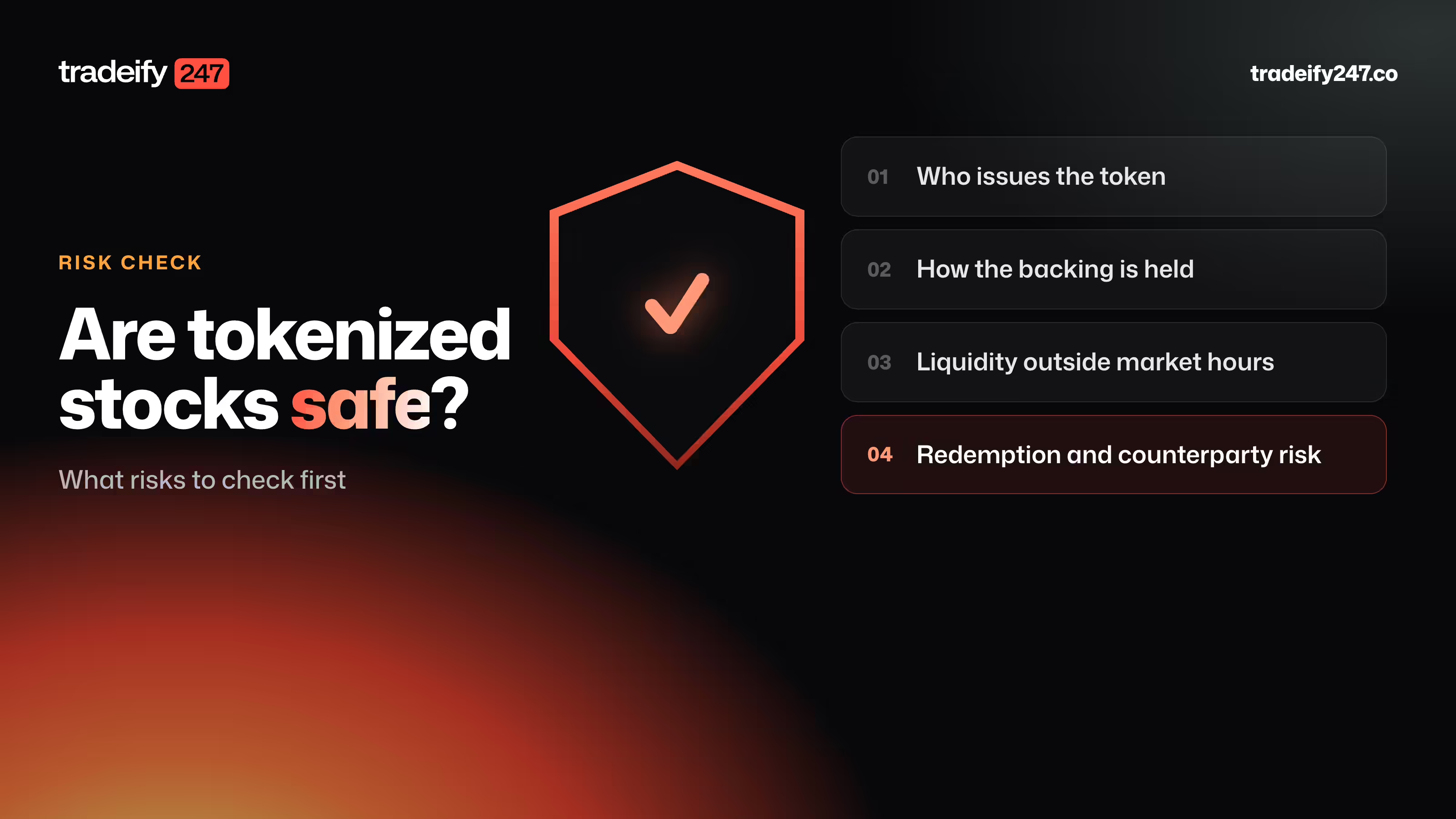
Are Tokenized Stocks Safe and What Risks to Check First
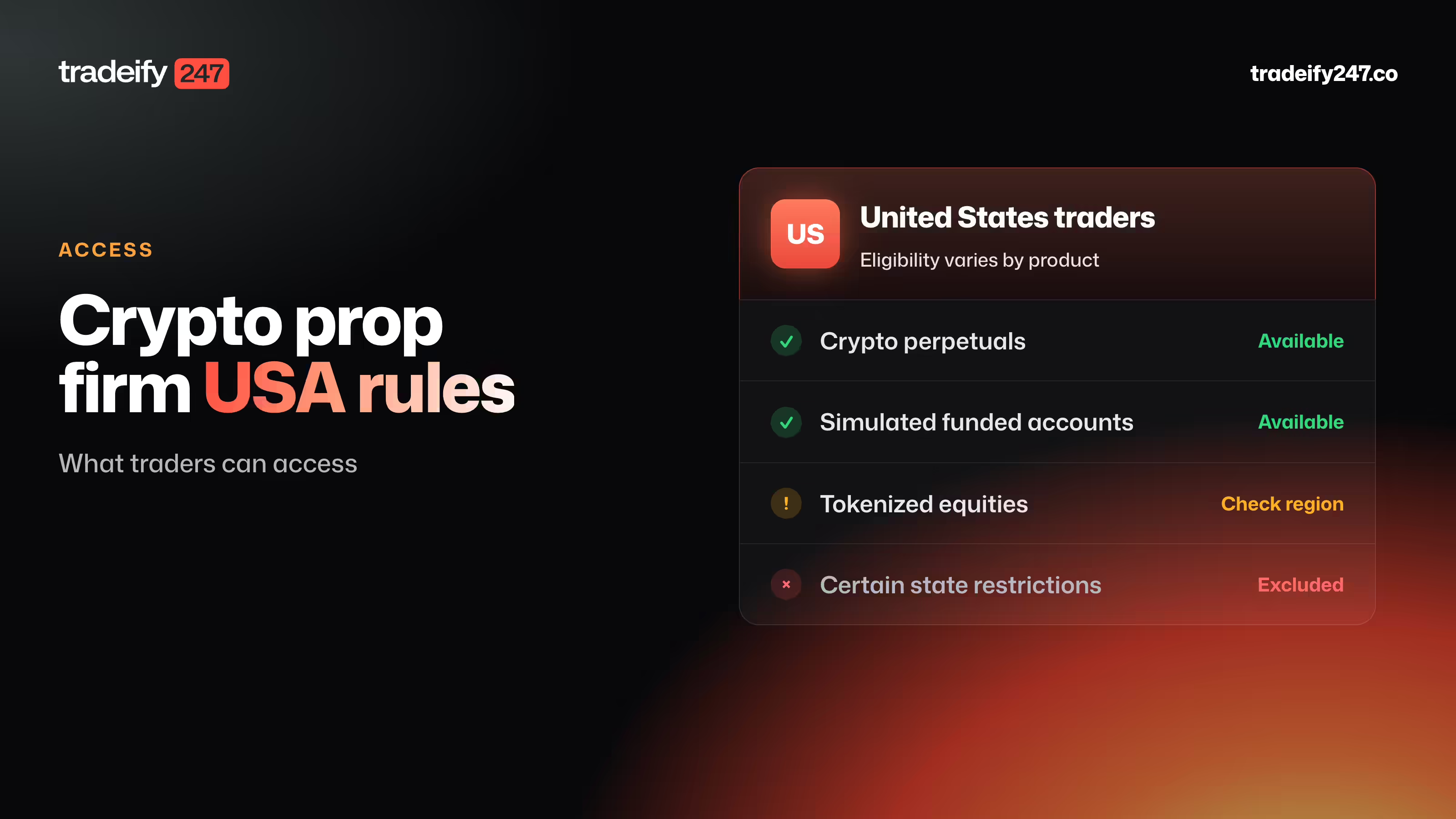
Crypto Prop Firm USA Rules and What Traders Can Access