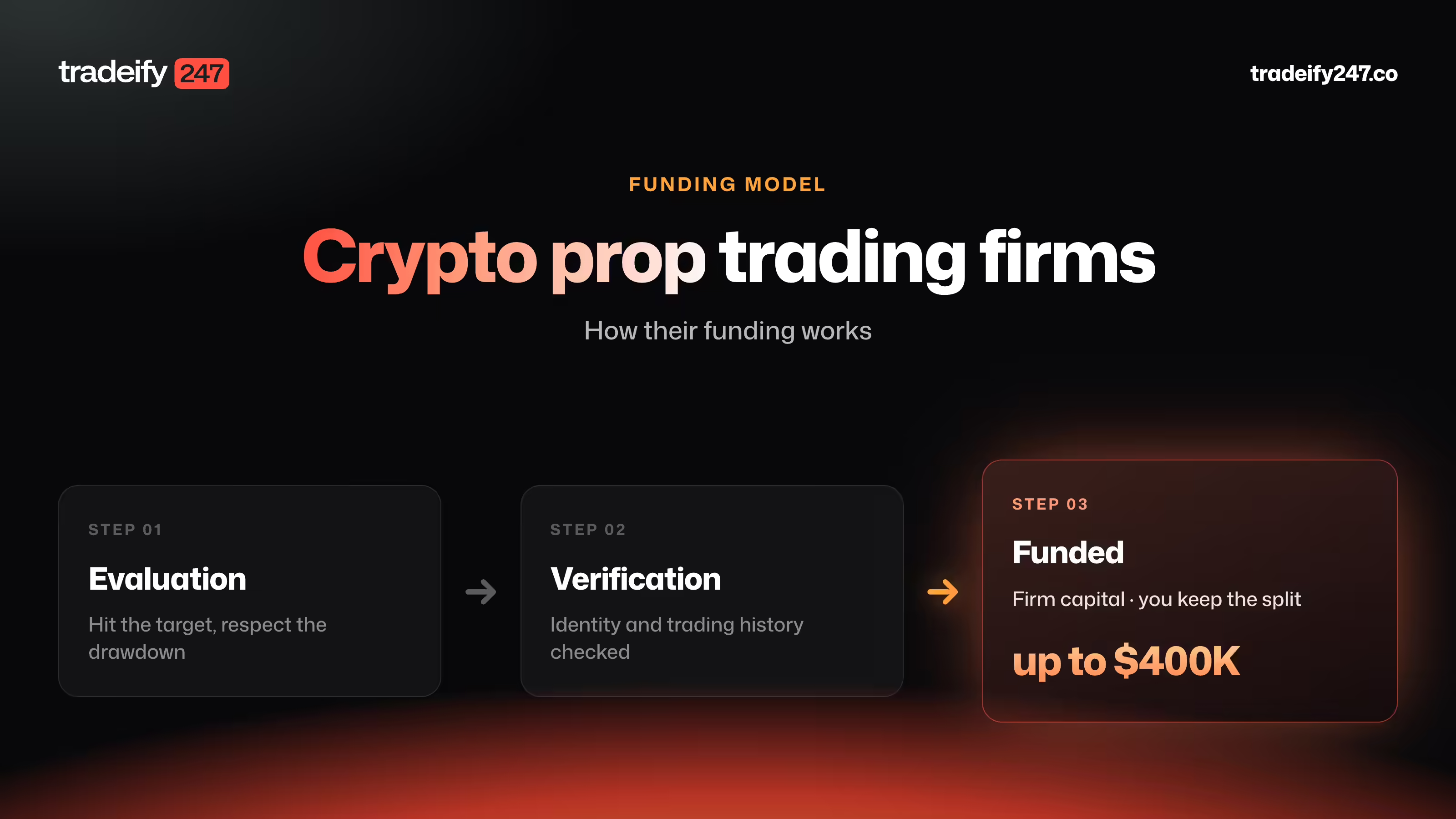



Crypto Trading Psychology in Prop Firms


.svg)

TL;DR: Cryptocurrency markets operate 24/7 (8,760 hours/year), where trading psychology often determines success more than technical analysis. Key mental challenges include emotional reactions to volatility (panic selling during crashes, overconfidence during rallies) and cognitive biases like Anchoring to entry prices, Loss Aversion (feeling losses more intensely than equivalent gains), and Sunk Cost Fallacy in losing positions. Professional prop firms like Tradeify247 mitigate these psychological pitfalls through structural constraints: Soft Daily Loss Limits (e.g., 2.5%), Max Trailing Drawdowns to enforce hard stops, and Consistency Rules (capped at 20-35% of total profit) to mandate repeatable strategies. Actionable resilience tactics include trade journaling to identify emotional patterns, physical "No-Trade Zones" to prevent overtrading, automated bracket orders to remove execution bias, and maintaining proper rest and recovery to stay mentally sharp.
Introduction to Crypto Trading Psychology
The global cryptocurrency market represents the most significant behavioral experiment in the history of modern finance. Unlike traditional equity or commodity markets, which are governed by centralized institutions, set business hours, and established valuation models, the digital asset ecosystem is a 24/7, high-volatility environment driven primarily by the collective crypto trading psychology of its participants. In this arena, technical analysis and fundamental research are frequently subordinate to the "invisible hand" of human emotion. Crypto trading psychology, the study of how mental states and cognitive biases influence decision-making, serves as the critical determinant between long-term capital preservation and catastrophic account failure. This report provides an exhaustive analysis of the psychological foundations of crypto trading, the behavioral mechanisms of market participation, and the structural solutions offered by prop firm environments such as Tradeify247 to enforce discipline.

Trade Crypto Without Limits
Tradeify is built for crypto traders who want clarity, consistency, and speed — not surprises.


The Behavioral Reality of Crypto Trading
At its most fundamental level, crypto trading involves a conflict between emotional impulses and rational strategy. Human decision-making under pressure is not naturally optimized for the rapid, high-stakes environment required in high-margin futures trading. The psychology of market participation is heavily influenced by emotional responses that prioritize immediate comfort over long-term profitability.
Fear-Based Decision Making in Crypto Trading
When a trader witnesses a sharp decline in the price of a core holding, such as a 10% flash crash in Bitcoin, the immediate emotional response is often fear. This emotional state can trigger panic-driven decisions—closing positions not because technical indicators suggest an exit, but simply to escape the discomfort of watching losses accumulate. This represents a fundamental failure in crypto trading psychology: prioritizing short-term emotional relief over strategic position management.
The result is often "panic selling," where traders exit positions at exactly the wrong time, crystallizing losses that could have been temporary drawdowns in an otherwise valid trade setup.
Greed-Driven Overconfidence in Crypto Trading
During a "parabolic" bull run, the psychology of success can be equally dangerous. Every profitable trade reinforces the behavior that led to the gain, creating a feedback loop where traders begin to associate crypto trading activity with pleasure and validation rather than viewing it as a professional process requiring discipline.
Over time, this leads to overconfidence bias, where traders attribute their success to inherent skill rather than favorable market conditions. This often results in increased position sizing and the total abandonment of risk management protocols just as the market reaches its peak—precisely when caution is most needed.
The conversation happens live
Blog comments are too slow for crypto. Join 12,000+ traders in our Discord to discuss this article, share charts, and debate the market in real-time.
Join Discord
| Emotional State | Primary Market Driver | Behavioral Outcome | Performance Risk |
|---|---|---|---|
| Fear | Volatility / Uncertainty | Panic selling, premature exits | Missing reversals, crystallizing losses |
| Greed | FOMO / Euphoria | Excessive position sizing, ignoring stops | Catastrophic drawdowns, account blowouts |
| Discipline | Rule adherence / Planning | Following strategy regardless of emotion | Sustainable profitability, career longevity |
Cognitive Biases in Crypto Trading Psychology
Beyond emotional reactions, traders face systematic cognitive biases that distort rational decision-making in crypto trading environments, particularly within prop firms where capital is provided but must be managed according to strict rules.
Anchoring Psychology in Crypto Trading
Anchoring bias occurs when a trader fixates on a specific price point (usually their entry price) as the "true value" of an asset. If Bitcoin is purchased at $95,000, the trader unconsciously treats $95,000 as the anchor, making it psychologically difficult to exit at $94,000 even if technical analysis clearly indicates further downside. This psychological attachment to arbitrary price levels leads to holding losing positions far longer than strategy dictates.
Loss Aversion in Prop Firm Crypto Trading
Loss aversion describes the psychological reality that losses feel approximately twice as painful as equivalent gains feel pleasurable. A $1,000 loss creates more emotional distress than a $1,000 gain creates satisfaction. In prop firm crypto trading, this manifests as traders taking excessive risks to "break even" on losing trades rather than accepting a small, disciplined loss. Tradeify247's 3% daily drawdown and 6% max drawdown rules serve as external guardrails against this innate human tendency.

Keep Reading
See all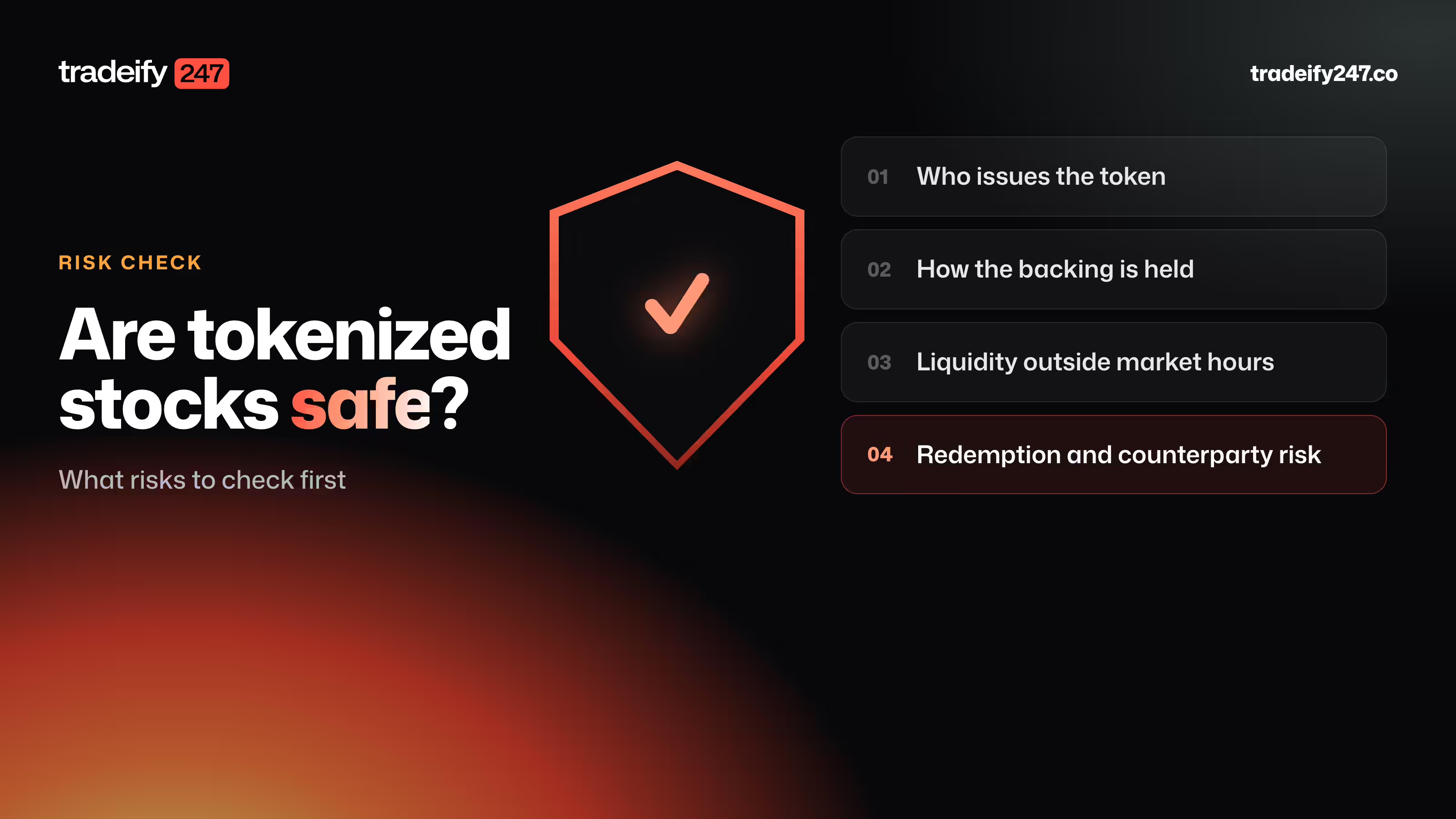
Are Tokenized Stocks Safe and What Risks to Check First
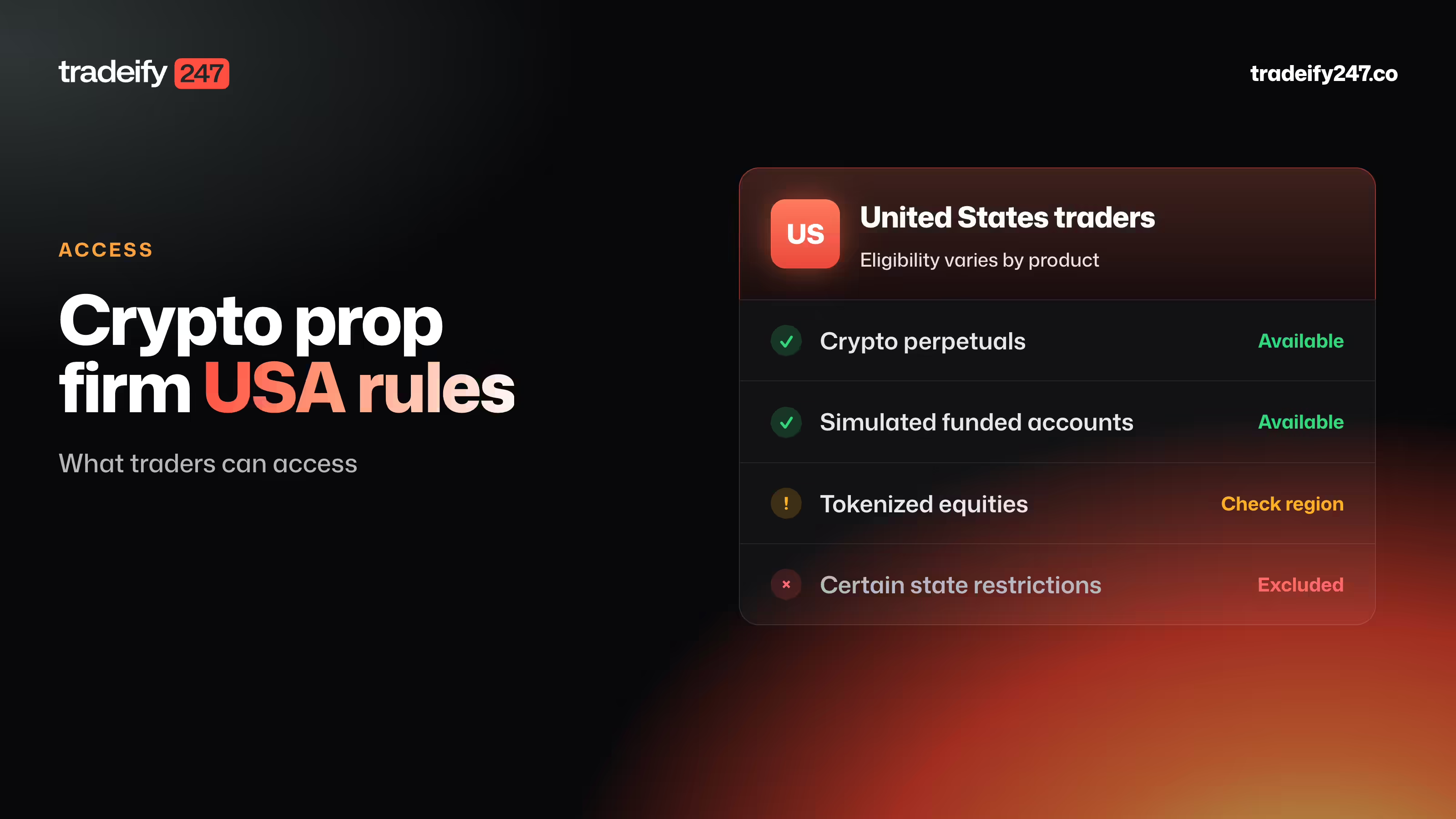
Crypto Prop Firm USA Rules and What Traders Can Access